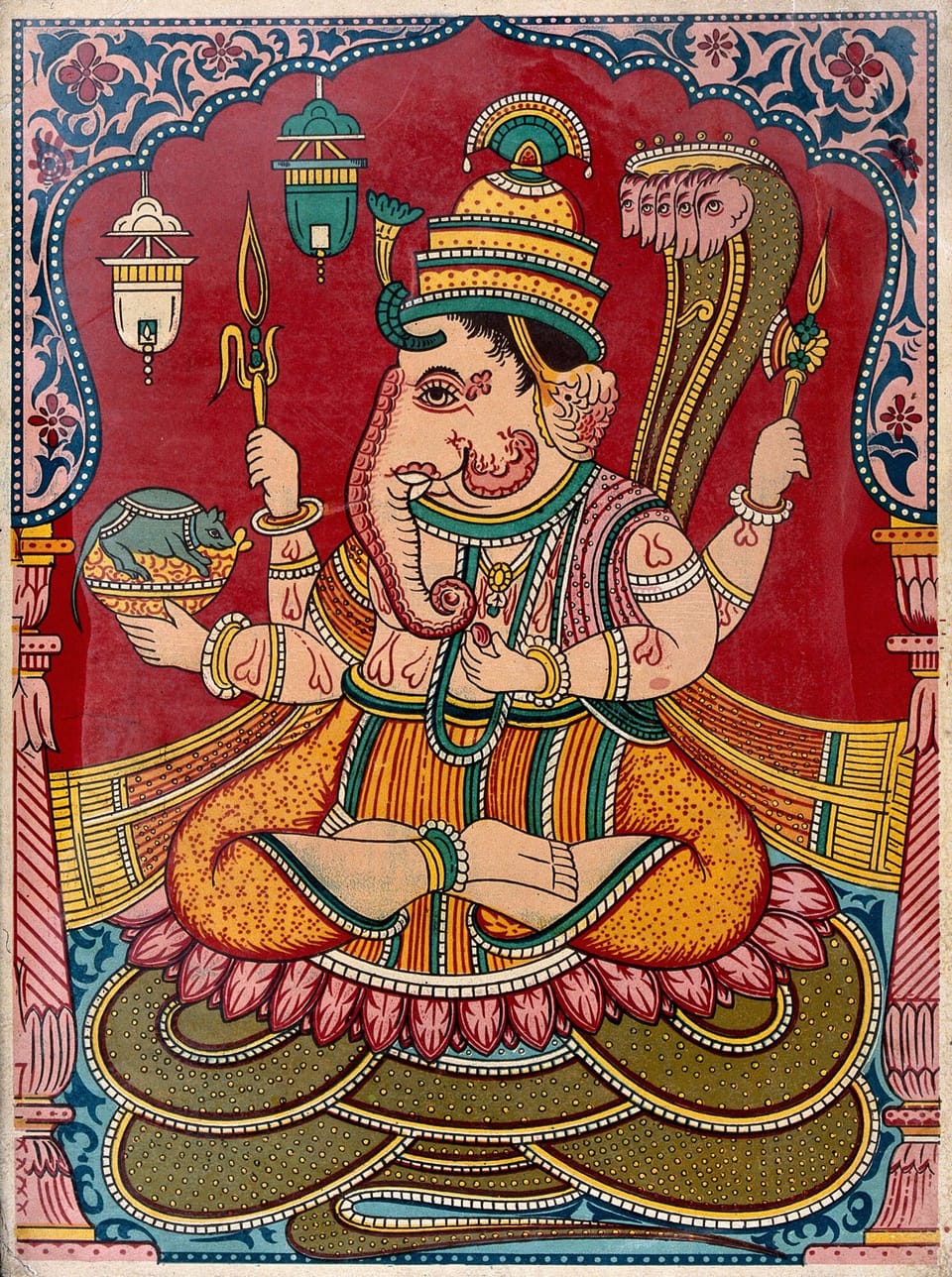
Ganesh
गणेशవినాయకుడుவிநாயகர்
Also known as: Ganesha · Ganpati · Vinayaka · Vighnaharta · Gajanan · Ekadanta · Lambodara · Vakratunda · Pillaiyar · Siddhivinayak
Ganesh is the elephant-headed son of Shiva and Parvati, known as Vighnaharta, the remover of obstacles. Devotees pray to him first, before any puja or new start, and worship him on Wednesdays and at Ganesh Chaturthi with modaks and durva grass.
- Day of worship
- Wednesday
- Festivals
- Ganesh Chaturthi
Texts for Ganesh
The story
The Puranas tell that Parvati made a child from the fragrant paste she used on her body, and asked him to guard her door. When Shiva came home, the boy did not know him and would not let him in. They fought, and the boy lost his head. To comfort Parvati, Shiva brought him back to life with an elephant's head. He made him leader of his ganas, Ganapati, and blessed him to be worshipped before every other god.
Devotees find meaning in each part of his form. The big head stands for wisdom and the large ears for listening well. His trunk curves, so he is called Vakratunda. He has a single tusk, so he is called Ekadanta, and tradition says he broke off the other one to write down the Mahabharata as Vyasa spoke it. He rides a small mouse.
That is why a puja, a wedding, a griha pravesh or a new business begins with "Shri Ganeshaya Namah" and the shloka "Vakratunda Mahakaya". People offer him modaks and laddoos, red flowers and blades of durva grass, often in counts of twenty-one.
Ganesh Chaturthi, in the month of Bhadrapada, is his big festival. Families bring home a clay idol and sing "Jai Ganesh Deva" and "Sukhakarta Dukhaharta" every evening. After a day and a half, or as long as ten days, they take him for immersion, calling "Ganpati Bappa Morya!". Outside India many families do the immersion at home, in a bucket or tub of water.